
Metal U-Rings & V-Rings
Metal U-rings and V-rings are high-performance static sealing solutions designed for high-temperature, high-pressure and demanding industrial applications where conventional elastomeric seals may not provide the required performance.
Their formed metallic profiles provide controlled resilience under compression, allowing the seal to maintain contact with the mating surfaces through changes in pressure, temperature and joint conditions. Depending on the seal geometry and orientation, system pressure can also assist in energising the sealing profile.
International Seal supplies standard and custom metal U-rings and V-rings in stainless steels, nickel-based superalloys and specialist metals. Seals can be supplied to customer drawings, existing specifications or application requirements, with a range of sizes, materials and surface coatings available.
Metal U-Ring & V-Ring Specifications
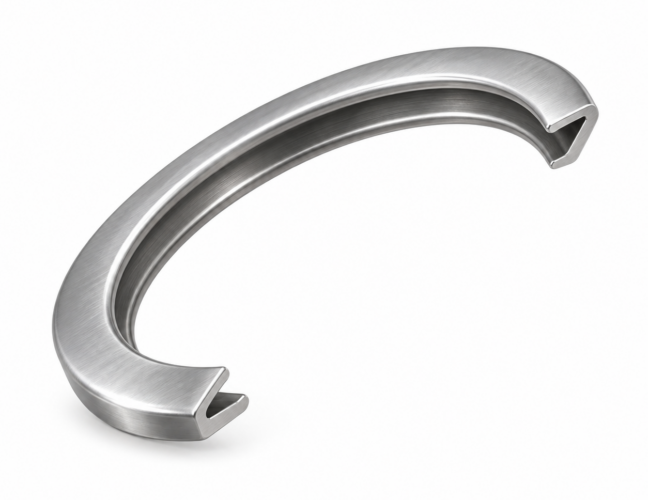
Metal U-rings and V-rings are engineered for critical static sealing applications involving elevated temperatures, high pressures, aggressive media and demanding operating cycles.
- Resilient Formed Metal Seal Construction
- Internal & External Pressure Configurations
- Pressure-Energised Designs Available
- High-Temperature & High-Pressure Applications
- Vacuum & High-Vacuum Applications
- Surface Platings & Coatings Available
- Supplied to Drawings or Application Requirements
Materials & Surface Coatings
Metal U-rings and V-rings are available in a range of stainless steels, nickel-based superalloys and specialist materials. Material selection should consider operating temperature, pressure, process media, corrosion resistance, thermal cycling and the mechanical requirements of the sealing system.
Metal U-rings and V-rings can be supplied with a range of specialist surface platings and coatings to improve sealing performance, surface conformity and corrosion resistance.
Available options include silver, gold, copper, nickel, tin, PTFE-based coatings and specialist plating combinations, depending on the seal design and application requirements. Selection should consider operating temperature, pressure, mating surface finish, available seating load and required leakage performance.
For additional guidance, see our Metal Seal Platings and Coatings section.
Typical Applications
Metal U-rings and V-rings are used in demanding sealing applications where extreme temperatures, high pressures, aggressive media or repeated operating cycles can exceed the capabilities of conventional elastomeric sealing materials.
Their resilient metallic profiles make them particularly suitable for critical static joints requiring dependable sealing performance across changing operating conditions.
- Aerospace & Defence Equipment
- High-Pressure Flanges & Connections
- High-Temperature Process Equipment
- Vacuum & High-Vacuum Systems
- Turbines, Engines & Exhaust Systems
- Valves, Pumps & Compressors
- Chemical & Petrochemical Processing
- Power Generation & Energy Systems
- Pressure Vessels & Critical Static Joints
The correct seal profile, material, orientation and surface coating should be selected according to the operating pressure, temperature range, pressure direction, mating surface condition, process media and required leakage performance.
Metal U-Rings
Metal U-rings, also known as metal U-seals or metallic U-seals, feature a formed U-shaped cross-section designed to provide controlled resilience and sealing contact when installed between mating components.
The open profile can be orientated according to the direction of system pressure. In pressure-energised designs, pressure acting within the U-section can increase contact force against the sealing surfaces as operating pressure rises.
Unlike spring-energised metal seals, these U-ring designs rely on the resilience of the formed metallic profile and, where applicable, system pressure to maintain sealing contact, without a separate internal energising spring.
Metal U-rings are particularly suited to high-pressure and high-temperature static sealing applications where a resilient metallic seal is required.
Internal & External Pressure U-Rings
Metal U-rings can be configured for either internal or external pressure depending on the design of the sealing joint.
Correct orientation of the open section allows system pressure to assist the sealing action, making the direction of pressure an important consideration when specifying a metal U-ring.
Custom Metal U-Rings
Custom metal U-rings can be supplied for applications requiring specific diameters, section geometries, materials and operating requirements.
International Seal can support new designs, existing drawings, replacement seals and customer-specific applications.
Metal V-Rings
Metal V-rings, also referred to as metal V-seals or metallic V-seals, use a formed V-shaped sealing profile to provide resilience and controlled contact against the mating surfaces.
The profile can be engineered to suit demanding temperature and pressure conditions, with the geometry of the seal selected according to the required compression, available installation space and operating environment.
Metal V-rings can provide an effective sealing solution for high-temperature, high-pressure and specialised industrial equipment where conventional sealing materials may be unsuitable.
Metal V-Ring Design
The geometry of a metal V-ring allows the sealing element to flex under installation load while maintaining contact with the mating surfaces.
Seal dimensions, material thickness, orientation and surface treatment can be adjusted to suit the particular mechanical and operating requirements of the application.
Custom Metal V-Rings
Metal V-rings can be supplied in custom diameters and profiles across stainless steels, nickel-based alloys and specialist materials.
International Seal can support requirements based on customer drawings, existing seal specifications, replacement components and new engineered sealing applications.
Custom Metal U & V Seals
Metal U-rings and V-rings are frequently application-specific, making the operating conditions and joint design important when selecting the correct seal.
For new or replacement applications, our team can review information including seal dimensions, operating temperature, pressure, media, flange design and existing drawings to help determine an appropriate metallic sealing solution.
Metal V-Rings and Rubber V-Rings Are Different Products
The term “V-ring” is used for two unrelated sealing products, and it is worth being clear which one an application needs.
A rubber or elastomeric V-ring — commonly supplied as VA, VS or VL types — is a rotary shaft seal. It is fitted to a shaft and its flexible lip runs against a counterface to exclude dirt, dust and splash water from bearings and housings. It is a dynamic, non-metallic component.
A metal V-ring, or metal V-seal, is a static sealing element with a formed V-shaped metallic cross-section, compressed between two mating faces to seal a joint under pressure and temperature conditions that would be beyond an elastomer. It does not run against a rotating shaft.
This page covers metal V-rings. If you are looking for rotary shaft V-rings or other elastomeric sealing profiles, see our fluid power sealing range or contact us and we will point you to the right product.
When a Metal U-Ring or V-Ring Is Specified
Metal U-rings and V-rings are less common than O-rings, C-rings and E-rings, and they are usually chosen for a specific reason rather than as a default. The most frequent are:
- Restricted sealing space. A formed U or V section can be produced in geometries that fit joints where a hollow ring or C-section will not.
- A required combination of load and recovery that falls between what other profiles offer, tuned through the section geometry and wall thickness.
- Replacement of an existing seal. Where equipment was designed around a formed U or V profile, an equivalent is usually needed rather than a substitute profile.
- Pressure direction and orientation requirements that suit an open formed section energised by system pressure.
- Non-circular or shaped joints, where a formed metallic profile can follow the geometry required.
Because these profiles are frequently application-specific, the joint design matters more than the nominal size. Where you are replacing an existing seal, a drawing, part number or physical sample is the most reliable starting point. Where a new joint is being designed, send the operating conditions, available space and flange arrangement and we will advise on whether a U or V profile is appropriate or whether a metal C-ring or metal E-ring would suit better. See our metal seals overview for a comparison across the metallic range.
Metal U-Ring & V-Ring FAQs
What is a metal U-seal?
A metal U-seal, or metal U-ring, is a static sealing element with a formed U-shaped metallic cross-section. It is compressed between two mating components, and where the open section is orientated towards the pressure, system pressure can act within the U to increase contact force as operating pressure rises.
What is a metal V-seal?
A metal V-seal, or metal V-ring, is a static sealing element with a formed V-shaped metallic profile that flexes under installation load to maintain contact with the mating surfaces. It is used in high-temperature, high-pressure and specialised industrial equipment where conventional sealing materials are unsuitable.
Is a metal V-ring the same as a rubber V-ring?
No. A rubber V-ring — VA, VS or VL type — is a rotary shaft seal that runs against a counterface to exclude contamination. A metal V-ring is a static seal compressed between two faces. They are unrelated products that share a name.
Does the orientation of a metal U-ring matter?
Yes. Where the design is pressure-energised, the open section must face the pressure for the seal to energise correctly. Direction of pressure should therefore be stated when specifying or ordering a metal U-ring.
What are metal U-rings and V-rings made from?
Commonly stainless steels including 304 and 316, and nickel-based alloys including Inconel X-750, Alloy 718 and Hastelloy, with silver, gold, copper, nickel, tin or PTFE-based surface coatings depending on the design and duty.
Can metal U-rings and V-rings be supplied to a drawing?
Yes. These profiles are frequently application-specific, and seals can be manufactured to customer drawings, dimensions or application requirements across a range of diameters, section geometries, alloys and surface treatments. Existing drawings, part numbers and physical samples can be reviewed.
Need a Metal U-Ring or V-Ring Quote?
Because formed metallic profiles are usually specific to the equipment they seal, the joint design matters as much as the dimensions. Send us the seal or groove dimensions, section geometry, direction of pressure, operating temperature and pressure, process media and quantity where known.
Drawings, manufacturer part numbers, photographs and physical samples are all useful, particularly where the original specification is no longer available. If a U or V profile turns out not to be the best fit for the joint, we will say so and suggest an alternative.