
Fluid Power Sealing Solutions
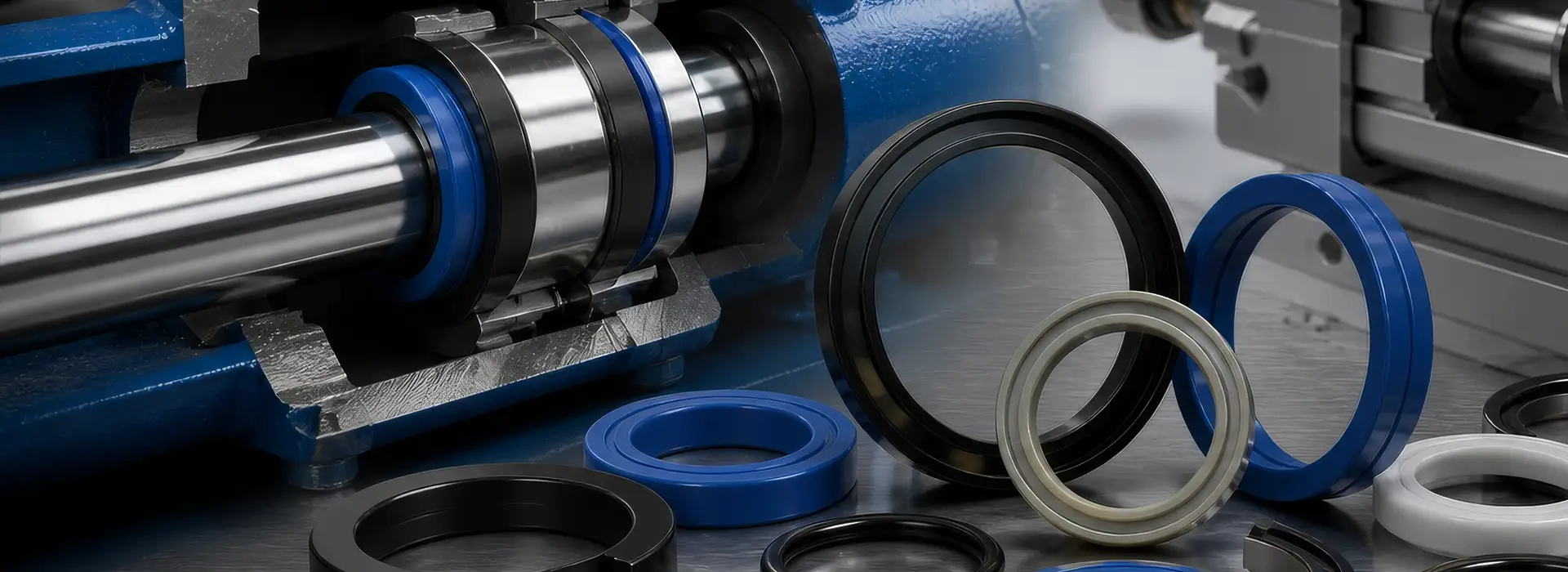
Seals for Hydraulic & Pneumatic Systems
Fluid Power Inventory
Hydraulic Seals:
Pneumatic Seals:
Materials:
Choosing the Right Seal for Each Point in a Cylinder
A hydraulic cylinder needs several different seals, and each sealing point has a different job. Getting the profile right at each one is what determines cycle life and the interval between rebuilds.
Piston seals hold pressure across the piston and determine whether the cylinder drifts under load.
Rod seals retain fluid at the gland and are the seal most often blamed for a visible leak.Buffer seals sit behind the rod seal to absorb pressure spikes that would otherwise damage it.
Wiper or excluder seals keep contamination out, which is the usual root cause when a rod seal fails early.
Wear rings and guide rings carry side load and stop metal-to-metal contact.
Back-up rings prevent O-ring extrusion at higher pressures.
Material follows from the duty: polyurethane for high-wear reciprocating service and extrusion resistance, PTFE and filled PTFE for low friction and glide rings, NBR for general mineral-oil duties, HNBR where pressure and temperature are higher. If you are rebuilding a cylinder and have the old seals, send them with the bore, rod diameter and operating pressure and we will identify the set.
Materials for Fluid Power Applications
The correct elastomer or polymer depends on the fluid in contact and the operating conditions. A quick guide to common selections:
If you are unsure which compound suits your system, send us the fluid, temperature range and pressure and we will make a recommendation.
Industry Standards & Compliance
Fluid power sealing is governed by dimensional and quality standards that ensure interchangeability and consistent performance. We supply components manufactured and qualified to the standards hydraulic and pneumatic buyers specify, including:
Material certification and dimensional reports are available on request. Confirm the specification required at enquiry stage and we will supply the matching compound.
Related Products
NBR O-rings across AS568 and BS1806 sizes, PTFE back-up rings and lip seals, polyurethane and rod seals, gaskets and custom moulded parts. See our O-ring size charts to identify a replacement.
Fluid Power Sealing FAQs
What is the difference between a rod seal and a piston seal?
A rod seal sits in the gland and seals against the moving rod, retaining fluid inside the cylinder, it is the seal usually responsible for a visible external leak. A piston seal seals across the piston inside the bore and holds pressure between the two chambers, determining whether the cylinder drifts under load.
What does a buffer seal do?
It sits behind the rod seal and absorbs pressure spikes before they reach it. In systems with rapid load changes, adding a buffer seal often extends rod seal life considerably.
Why do hydraulic seals fail early?
Contamination is the most common cause — which is why a failed rod seal often points to a worn wiper seal. Other frequent causes are the wrong material for the fluid, operating temperature above the compound's range, extrusion at high pressure where a back-up ring is needed, and side load from worn wear rings allowing metal contact.
When do I need a back-up ring?
Where system pressure is high enough to extrude the O-ring into the clearance gap. A PTFE back-up ring supports the O-ring and prevents extrusion. See our PTFE seals and components range.
Which material should I use for hydraulic seals?
NBR for general mineral-oil hydraulics, HNBR for higher pressure and temperature, polyurethane for high-wear reciprocating duties needing extrusion resistance, PTFE and filled PTFE for low-friction dynamic seals and glide rings, and EPDM for water-based fluids and brake fluid where petroleum resistance is not required.
Can you supply seals from a sample or an old seal kit?
Yes. Send the old seals along with the bore diameter, rod diameter and operating pressure and we will identify the set. Our O-ring size charts cover AS568, BS1806 and metric dimensions if you are measuring rather than matching.