
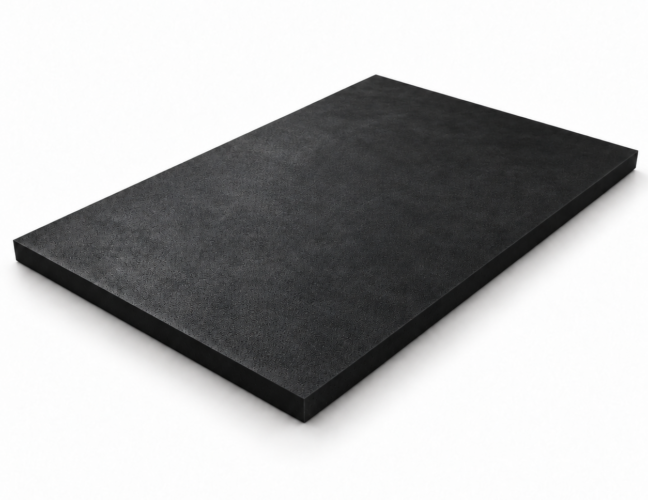
HNBR rubber sheet provides a combination of oil resistance, thermal stability and mechanical durability for demanding industrial sealing applications.
Specific temperature ratings, hardness, colour and chemical compatibility depend on the selected HNBR compound.
HNBR Rubber Sheet Properties
Oil & Lubricant Resistance
HNBR provides good resistance to many petroleum-based oils, greases and industrial lubricants. This makes HNBR rubber sheet suitable for gaskets and sealing components used around machinery, hydraulic systems and industrial equipment exposed to compatible hydrocarbon-based fluids.
High-Temperature Resistance
HNBR generally offers improved thermal stability compared with standard NBR. Many HNBR compounds are suitable for continuous operation at temperatures around 150°C, although the actual service limit depends on the formulation, operating media and exposure conditions.
Mechanical Strength & Abrasion Resistance
HNBR provides excellent mechanical strength, wear resistance and resistance to abrasion. These properties make it useful for sealing components exposed to repeated compression, mechanical loading and demanding operating conditions.
Ozone & Ageing Resistance
The hydrogenation process improves resistance to ozone, oxidation and environmental ageing compared with conventional nitrile rubber. This can make HNBR a useful choice for applications requiring both oil resistance and improved environmental durability.
HNBR Sheet for Gaskets & Sealing Components
HNBR rubber sheet is suitable for manufacturing flat gaskets, washers and sealing components used in demanding industrial environments. Sheets can be cut into circular, rectangular or bespoke profiles for equipment housings, flange connections and machinery assemblies. Its combination of oil resistance, heat resistance and mechanical durability makes HNBR particularly useful where conventional NBR materials may not provide sufficient service life.
When selecting an HNBR gasket, important considerations include:
International Seal can support distributors and OEMs requiring HNBR sheet for repeat gasket production, replacement components and specialist industrial sealing applications.
HNBR Rubber Sheet FAQs
What is the difference between HNBR and NBR rubber sheet?
HNBR is produced by hydrogenating conventional nitrile rubber, improving its resistance to heat, ozone and ageing. NBR remains a common choice for general-purpose oil-resistant applications, while HNBR is often selected for more demanding operating conditions.
Is HNBR rubber sheet oil resistant?
Yes. HNBR offers good resistance to many petroleum-based oils, greases and lubricants. Compatibility must be confirmed against the specific fluid and operating conditions.
What temperature can HNBR rubber sheet withstand?
Many HNBR compounds are suitable for continuous temperatures around 150°C. However, the actual temperature limit depends on the material grade, operating media and duration of exposure.
Is HNBR rubber sheet suitable for outdoor use?
HNBR generally provides improved ozone and environmental ageing resistance compared with standard NBR, making it suitable for certain exposed applications. Suitability depends on the compound and environmental conditions.
Is HNBR rubber sheet suitable for hydraulic applications?
Yes. HNBR is widely used for seals and gaskets in hydraulic systems where compatible fluids, elevated temperatures and mechanical loading are involved.
Need a HNBR Rubber Sheet?
International Seal supplies HNBR rubber sheets for industrial sealing, gasketing and fabrication requirements across the UK and internationally. Send us your required thickness, quantity and application details and our team will provide a competitive quotation.
For demanding operating conditions, include the temperature, media and relevant material specifications so that the suitability of the compound can be reviewed.