
Metal O-Rings and Metal O-Ring Seals
Metal O-rings, also known as metal O-ring seals or metallic O-rings, are engineered sealing solutions designed for high-temperature, high-pressure, vacuum and demanding industrial applications where conventional elastomeric O-rings may not be suitable. Manufactured from stainless steels, nickel-based superalloys and specialist metals, metal O-ring seals provide reliable static sealing across extreme operating conditions. Their hollow metal construction allows the seal to deform under installation load, creating a controlled sealing interface between the mating surfaces. Metal O-rings are engineered static sealing components for industrial and process equipment, not decorative or hardware rings.
International Seal supplies standard and custom metal O-rings, including hollow, self-energising and pressure-filled configurations. Seals can be supplied to customer drawings, existing specifications or application requirements, with a range of base materials, wall thicknesses and surface coatings available.
Metal O-Ring Specifications
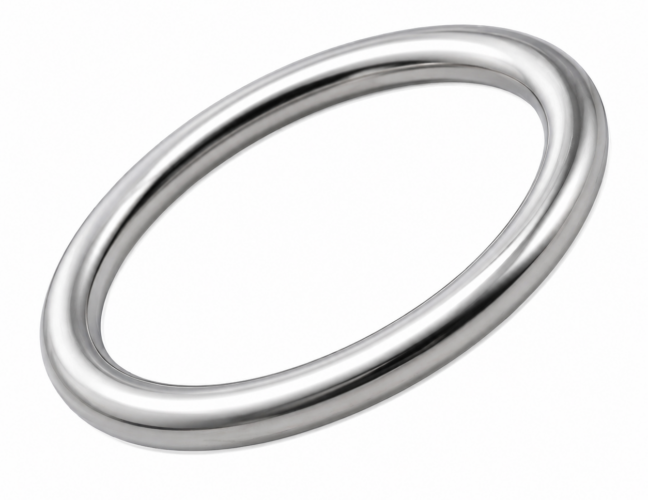
Metal O-rings are designed for critical static sealing applications where temperature, pressure, vacuum, chemical exposure or long-term sealing reliability can exceed the capabilities of conventional elastomeric seals.
- Hollow Metal O-Ring Construction
- Self-Energising & Pressure-Filled Designs
- Standard & Custom Diameters Available
- High-Temperature & High-Pressure Applications
- Surface Platings & Coatings Available
- Supplied to Drawings or Application Requirements
Metal O-Ring Materials and Surface Coatings
Metal O-rings can be manufactured from a range of stainless steels, nickel-based superalloys and specialist materials. Material selection should take into account operating temperature, pressure, process media, corrosion resistance, thermal cycling and the mechanical requirements of the application.
In addition, surface platings and coatings can be specified to improve sealing performance, reduce the required seating load and provide an appropriate interface between the seal and mating surfaces.
A range of surface platings and coatings can also be specified to improve sealing performance, reduce the required seating load and provide an appropriate interface between the seal and mating surfaces.
Depending on the application, metal O-rings can be supplied with silver, gold, copper, nickel, tin, PTFE-based coatings and specialist plating combinations. These surface treatments can improve sealing conformity, corrosion resistance and performance under demanding operating conditions. The most suitable base alloy and coating should be selected according to the operating temperature, pressure, media, flange design and available seating load.
For additional guidance, see our Metal Seal Materials & Coatings Guide.
Industrial Applications for Metal O-Ring Seals
Metal O-rings are used where conventional rubber or polymer sealing materials may be unsuitable because of extreme temperatures, high pressures, vacuum conditions or aggressive operating environments.
Their metallic construction makes them particularly suited to critical static joints where sealing performance must be maintained across demanding pressure and temperature cycles.
- High-Pressure Flanges & Connections
- High-Temperature Process Equipment
- Vacuum & High-Vacuum Systems
- Aerospace & Defence Equipment
- Turbines, Engines & Exhaust Systems
- Valves, Pumps & Compressors
- Chemical & Petrochemical Processing
- Power Generation & Energy Systems
- Pressure Vessels & Critical Static Joints
The correct metal O-ring construction, material and surface coating should be selected according to the pressure differential, temperature range, flange design, surface finish, media and required leakage performance of the application.
Metal O-Ring Configurations
Metal O-rings are available in several configurations, allowing the seal design to be matched to the pressure, temperature and sealing requirements of the application.
Hollow and Solid Metal O-Rings
Metal O-rings are produced from either formed metallic tubing or solid wire, and the choice affects how the seal behaves.
Hollow metal O-rings are formed from tube. The hollow section collapses in a controlled way under installation load, which allows the seal to conform to the mating surfaces at a lower load than a solid section of the same diameter would require. Hollow construction is also what makes vented and gas-filled designs possible.
Solid metal O-rings are formed from wire. They are simpler and generally more economical, and are used where the joint can supply a higher seating load and where the additional resilience of a hollow section is not required.
Where an existing seal is being replaced, hollow and solid rings of the same nominal dimensions are not necessarily interchangeable, the seating load and recovery differ. If you are unsure which construction is installed, send a sample or photograph and we will advise.
However, hollow and solid metal O-rings of the same nominal dimensions are not necessarily interchangeable, as their seating load and recovery characteristics differ. If you are unsure which construction is installed, send a sample or photograph and we will advise.
Hollow Metal O-Rings
Hollow metal O-rings use a formed metallic tube to create a resilient static seal. Compression of the hollow section during installation generates the contact load required to seal against the mating surfaces.
They are commonly used for high-temperature, vacuum and moderate-to-high pressure sealing applications where elastomeric O-rings may not provide sufficient temperature resistance or service life.
Self-Energising Metal O-Rings
Self-energising metal O-rings are designed so that system pressure acts within the seal, increasing the sealing force as operating pressure rises.
This configuration can provide improved sealing performance in high-pressure applications and systems subject to changing pressure conditions.
Pressure-Filled Metal O-Rings
Pressure-filled metal O-rings are hollow metallic sealing rings charged with gas during manufacture. As operating temperature increases, the internal gas pressure rises, helping to maintain sealing force against the mating surfaces.
These designs are commonly specified for high-temperature applications and systems exposed to thermal cycling, where maintaining sealing performance across changing operating conditions is essential.
Metal O-Rings for Internal and External Pressure
Where a metal O-ring is self-energising, the direction of system pressure determines how the seal must be orientated and which groove dimension the seal is designed against.
Internal pressure
In an internally pressurised joint, pressure acts outwards from the sealed cavity. A self-energising ring is vented so that pressure enters the hollow section and pushes the sealing surfaces outwards against the groove. In these designs the groove outside diameter is normally the reference dimension for the seal.
External pressure and vacuum
Where pressure acts from outside the sealed cavity, including vacuum service, where the differential runs inwards the seal is vented on the opposite side so that external pressure energises it. In these designs the groove inside diameter is normally the reference dimension.
Metal O-Ring Groove and Flange Requirements
Because a metal O-ring seals by controlled deformation, the joint it sits in is part of the sealing system:
- Groove depth sets the compression the seal is subjected to, and therefore the load and the sealing interface achieved.
- Groove width must allow the seal to deform without being constrained or extruded.
- Mating surface finish governs how completely the plated surface can conform. Tighter leakage requirements demand better-controlled finishes.
- Available clamping load must be sufficient to seat the seal. A joint that cannot deliver it will not seal, whatever seal is specified.
- Plating thickness adds to the effective section, so confirm whether drawing dimensions are stated before or after plating.
Where seals are supplied to a drawing we work to the dimensions and tolerances specified. Where you are designing a new joint, send the operating conditions, the space available and the flange arrangement and we will advise on what can be supplied and what the seal will require of the groove.
Metal O-Ring FAQs
What is a metal O-ring?
A metal O-ring is a static sealing ring formed from metal tube or wire, compressed between two mating faces to seal a joint. It is specified where operating temperature, pressure, vacuum, media or leakage requirements exceed what an elastomeric O-ring can withstand.
How does a self-energising metal O-ring work?
The ring is vented with small holes or grooves on one side so that system pressure enters the hollow section and acts outwards on the sealing surfaces. As operating pressure rises, the sealing force rises with it. The venting must face the pressure, so the direction of pressure is part of the specification.
What is a pressure-filled or gas-filled metal O-ring?
A hollow ring charged with gas during manufacture. As temperature rises, the internal gas pressure rises and increases the force the seal applies, helping to compensate for relaxation in the joint. These designs are used where thermal cycling is significant.
Can metal O-rings be used in vacuum applications?
Yes. Metal O-rings are widely used in vacuum and high-vacuum equipment because they avoid the outgassing and permeation associated with elastomers. In vacuum the differential acts inwards, so a self-energising ring must be vented for external pressure.
Can metal O-rings be reused?
Most metal O-rings are plastically deformed on installation and are intended as single-use components. A ring that has been compressed has already given up part of its recovery and should normally be replaced whenever the joint is broken.
What materials are metal O-rings available in?
Commonly stainless steels including 304 and 316, and nickel-based alloys including Inconel X-750, Alloy 718 and Hastelloy, with silver, gold, copper, nickel, tin and PTFE-based surface coatings available depending on the design and duty. Material and coating should be selected against the full operating conditions.
Can you supply metal O-rings to a drawing or part number?
Yes. Metal O-rings can be manufactured to customer drawings, dimensions or application requirements. Existing manufacturer part numbers, drawings and physical samples can be reviewed where a replacement or alternative supply route is required.
Need a Metal O-Ring?
Send us the seal or groove dimensions, operating temperature and pressure, direction of pressure, process media and quantity where known, and we will confirm the construction, alloy and surface coating that suit the application.
If you are replacing an existing seal, a drawing, manufacturer part number, photograph or physical sample is often enough to start from. Prototype and small-quantity requirements can be discussed alongside production volumes.